
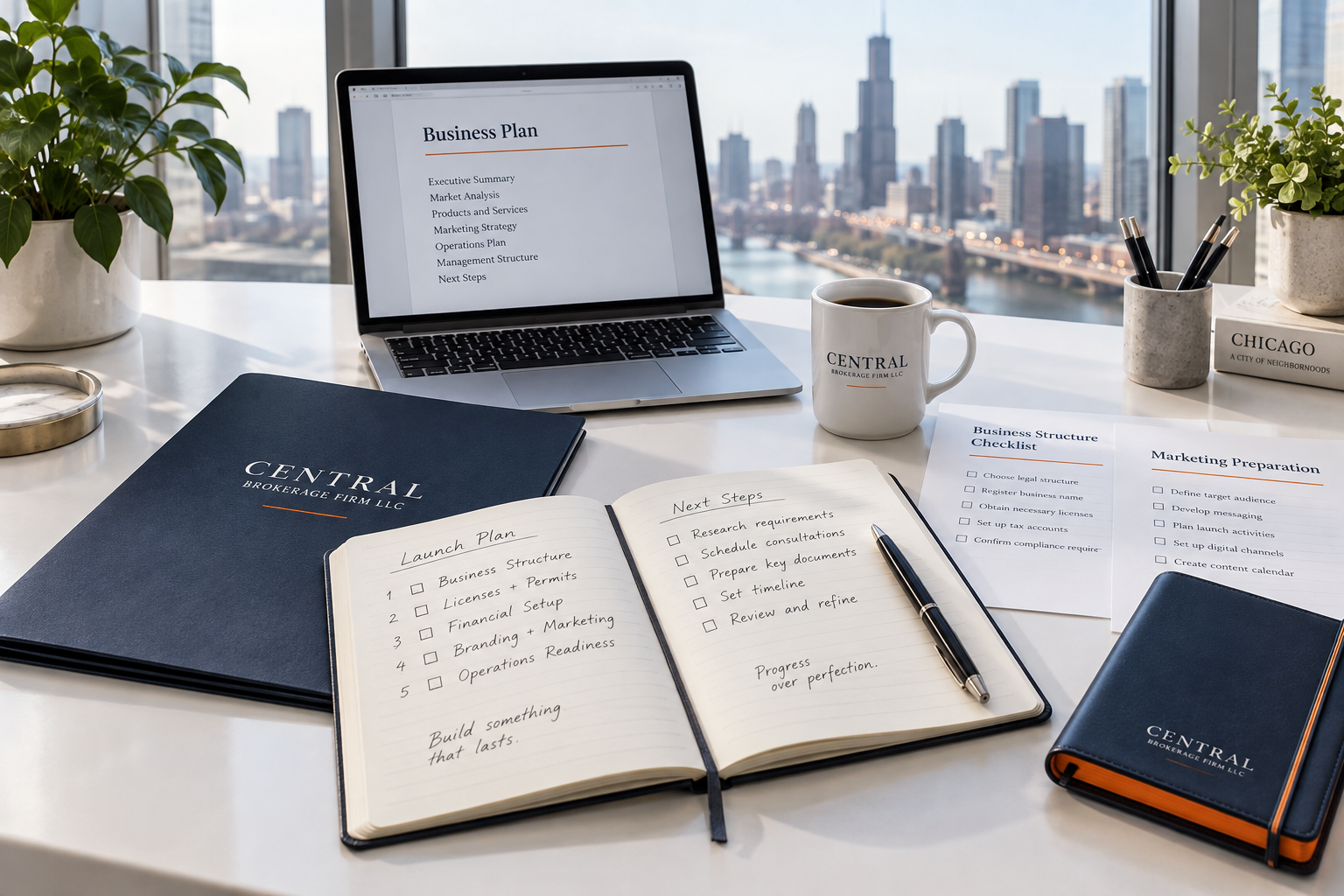
Starting a Business? Five Things to Organize Before You Launch
You have something valuable to offer.
It may come from years of experience, a professional skill, or a need you understand because you have lived it yourself.
Turning that experience into a business introduces a different set of responsibilities. Alongside providing your service, you become responsible for explaining it, preparing documents, responding to inquiries, managing schedules, and deciding what deserves your attention first.
It is understandable to feel confident in your abilities while still needing help organizing the business around them.
At Central Brokerage Firm LLC, we work with people at different stages of that process: individuals developing an idea, owners preparing to launch, and established businesses ready to improve how they operate.
A useful starting point is understanding what you already have, what needs attention, and which next steps will support the business you want to build.
These five areas provide a practical foundation.
1. Define Your Services So the Right Clients Can Recognize Themselves
When someone encounters your business for the first time, they are trying to answer a personal question: “Can this help with what I need?”
Your service descriptions should make that answer easier to find.
Start with the people you want to serve and the situations that bring them to you. A new agency owner may need help organizing policies and onboarding materials. An established business may need updated service documents. Someone preparing for an event may need a professional flyer.
Each person has a different starting point. Clear language helps them recognize where your services fit.
Before developing more marketing materials, answer these questions:
Who is this service intended for?
What situation would lead someone to seek it?
What specific assistance do you provide?
What will the client receive?
What information do you need to begin?
Which requests require a separate project or discussion?
For example, “administrative support” names a service category. “Assistance with typing, document formatting, email attachments, faxing, and digital file organization” gives the reader a clearer picture of the help available.
If you offer several services, group related offerings under understandable headings. Give each group a concise description and a clear way to inquire.
This allows you to present the breadth of your business while helping each visitor find a relevant starting point.
Put it into practice: Write a brief description of one service using words your intended client would naturally use. Ask someone unfamiliar with your business to explain what they believe they would receive.
2. Build a Working Plan That Makes Your Next Steps Clear
A business can begin with a strong idea and still need a more organized path toward launch.
You may have useful information spread across notebooks, emails, screenshots, and conversations. Bringing those pieces together helps you see what is ready, what remains unfinished, and where additional support would be useful.
Create a working plan that covers:
Your services and intended customers.
Business setup matters and industry-specific requirements to investigate.
Documents and administrative processes to prepare.
Workspace, equipment, and technology needs.
Pricing decisions and expenses to review.
Marketing materials and outreach activities.
Responsibilities, target dates, and unresolved questions.
Then arrange the work in a practical order.
Before preparing a flyer, for example, confirm the service description, business contact details, and action you want the reader to take. Before developing an intake form, identify the information you need to understand and respond to a client’s request.
For each task, record the next action, the person responsible, and anything needed before it can move forward.
A status such as “In progress” or “Waiting for information” can make an unfinished task easier to manage. It shows whether the next step is completing work, making a decision, or following up.
Your plan should remain useful as circumstances change. Review it regularly and adjust priorities when new information becomes available.
Put it into practice: Select three priorities for your current stage. Give each one a specific next action and a realistic target date. Use those priorities to guide your immediate work.
3. Prepare Documents That Support Consistent Service
Well-organized documents help you explain expectations, collect information, and carry out recurring responsibilities.
Begin by thinking through a typical client experience.
A person contacts your business. You learn what they need, ask questions, discuss the proposed work, and confirm the next step. Once work begins, you need a way to manage information, communicate progress, and record what has been completed.
Your documents should support that process.
Depending on your business, useful materials may include:
Inquiry and intake forms.
Service descriptions and project outlines.
Scheduling and appointment checklists.
Policies and operating procedures.
Staff onboarding materials.
Task lists and training records.
Communication templates.
Document tracking and follow-up logs.
Each document should have a clear purpose.
A policy explains an expectation or how a situation is handled. A procedure describes the steps involved. A form captures the information needed to support the work.
For example, an inquiry procedure might explain who reviews incoming messages, what details to request, where to record the conversation, and when to follow up. A corresponding checklist helps the person handling the inquiry complete those steps consistently.
The details should reflect your actual business. Use accurate service descriptions, current contact information, and clearly assigned responsibilities. Review materials when your processes change.
At Central Brokerage Firm LLC, document support begins with understanding what the material needs to accomplish and how you intend to use it. Existing drafts can provide a starting point for discussing updates, organization, and formatting.
Put it into practice: Identify one recurring task that currently depends heavily on memory. Consider whether a checklist, form, or written procedure would make it easier to manage.
4. Create Marketing That Helps People Understand and Approach Your Business
Your marketing introduces both your services and the experience people can expect when they contact you.
Clear, thoughtful communication can make that first conversation easier. Readers should understand who you help, what assistance is available, and how to ask about their situation.
Give each marketing piece a defined purpose.
A flyer promoting caregiver training will need a different message from one introducing document support. A website page about agency startup assistance should speak to the questions an agency owner is likely to bring.
For each piece, identify:
The audience you want to reach.
The need or situation you are addressing.
The service you want to explain.
The essential details a reader needs.
The next action you want them to take.
Specific language helps readers connect the service to their own needs.
“Ask About Caregiver Training” tells an agency owner where to begin. “Discuss Your Business Needs” invites a broader project conversation. “Request Document Support” gives someone with a defined administrative task a direct starting point.
Keep your business identity consistent across your website, flyers, email signature, and other materials. Check names, contact details, service descriptions, and links before sharing them.
Your marketing should also represent your services accurately. Describe the work you can provide and give people room to ask questions before deciding.
Central Brokerage Firm LLC assists with flyers, promotional materials, service descriptions, and business content developed around your audience and message.
Put it into practice: Review one marketing piece through the eyes of a first-time reader. Can they quickly understand the service, recognize whether it fits their needs, and find a clear way to contact you?
5. Organize the Administrative Work That Keeps Business Moving
Behind every appointment, project, and completed service is administrative work.
Messages need responses. Documents need preparation. Appointments need coordination. Unfinished tasks need follow-up.
Planning how you will handle these responsibilities helps you maintain a clearer picture of your work.
For each inquiry or project, you should be able to identify:
What the person requested.
What information has been received.
What still needs clarification.
What work has been discussed or agreed upon.
What the next action is.
Who is responsible for completing it.
A consistent folder system, calendar, and task tracker can provide a useful foundation.
Give files recognizable names. Keep related information together. Clearly identify the version of a document that is ready to use. Record commitments and follow-up dates somewhere you can reliably review them.
You can also identify administrative tasks for which you would like assistance.
Central Brokerage Firm LLC provides support with faxing, preparing emails and attachments, typing and formatting routine documents, organizing digital files, and completing routine forms using information you provide. Scheduling assistance and other administrative tasks can be discussed as part of the proposed work.
You may have one document to prepare or several responsibilities that need organization. Explaining the task and its intended use helps us identify the assistance available.
Put it into practice: Review your unfinished work. Identify which tasks require your decision and which could benefit from administrative assistance.
Focused Support for Non-Medical Home Care Agency Owners
Starting or operating a non-medical home care agency brings together business organization, workforce preparation, documentation, and daily service responsibilities.
You may be preparing agency policies, developing caregiver onboarding materials, organizing client intake documents, or improving how personnel and training records are maintained.
You may also be planning training that helps caregivers understand their responsibilities, professional conduct, client dignity, communication, safety, documentation, and reporting expectations.
Central Brokerage Firm LLC offers focused agency startup and operational support, business document assistance, and caregiver training support. Our approach draws on practical experience in business ownership, non-medical home care agency operations, and caregiver preparation.
We begin by discussing your agency’s location, stage of development, existing materials, and priorities. Those details help define the proposed assistance.
For CPR, AED, and First Aid training, courses are offered through More Healing Care LLC Training Services. Course selection, availability, format, and requirements are discussed before enrollment. Certification requires successful completion of the applicable course requirements.
Support That Starts With Where You Are
Your business may be an idea you are ready to explore. You may have a launch date approaching, an existing operation to organize, or a specific project that needs attention.
Each starting point deserves a focused conversation.
Central Brokerage Firm LLC provides assistance across connected areas of business and creative support:
Startup planning and administrative organization.
Policies, procedures, and business documents.
Non-medical home care agency support.
Caregiver training support.
Flyers and promotional materials.
Service descriptions and business content.
Fax, email, and routine document assistance.
Digital file organization and other agreed administrative tasks.
We serve clients in different locations, with arrangements discussed according to the service and project needs. Share where you are based and how you would like to receive assistance so we can discuss the available options.
Bring your questions, existing drafts, and current priorities. We will discuss the proposed work, deliverables, availability, and pricing so you can make an informed decision.
Let’s Discuss What Would Help You Move Forward
To begin, tell us:
What type of business you are building or operating.
Whether you are planning, preparing to launch, or already serving clients.
The task or project you would like help with.
Your location and preferred timeline.
You have already taken an important step by identifying what you want to build. A focused conversation can help clarify the work ahead and where our services may be useful.
Central Brokerage Firm LLC
Style. Strategy. Service.
Office: (773) 484-9288
Fax: (773) 629-8328
Email: centralbrokeragefirm@outlook.com Website: centralfirmsolutions.com
Commercial Office:
9504 S. Hamilton Ave., Suite 3
Chicago, IL 60643